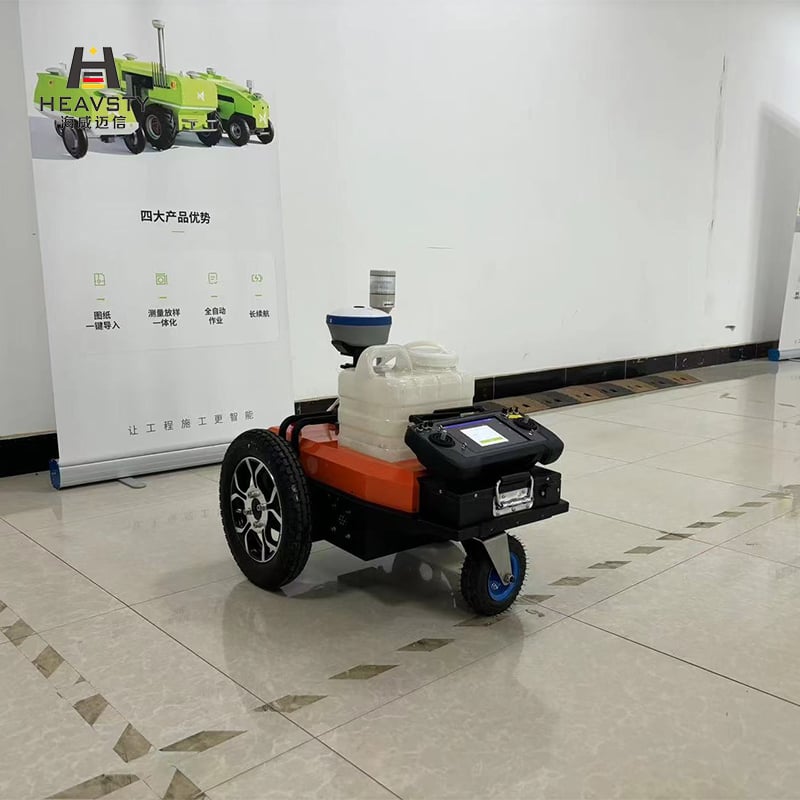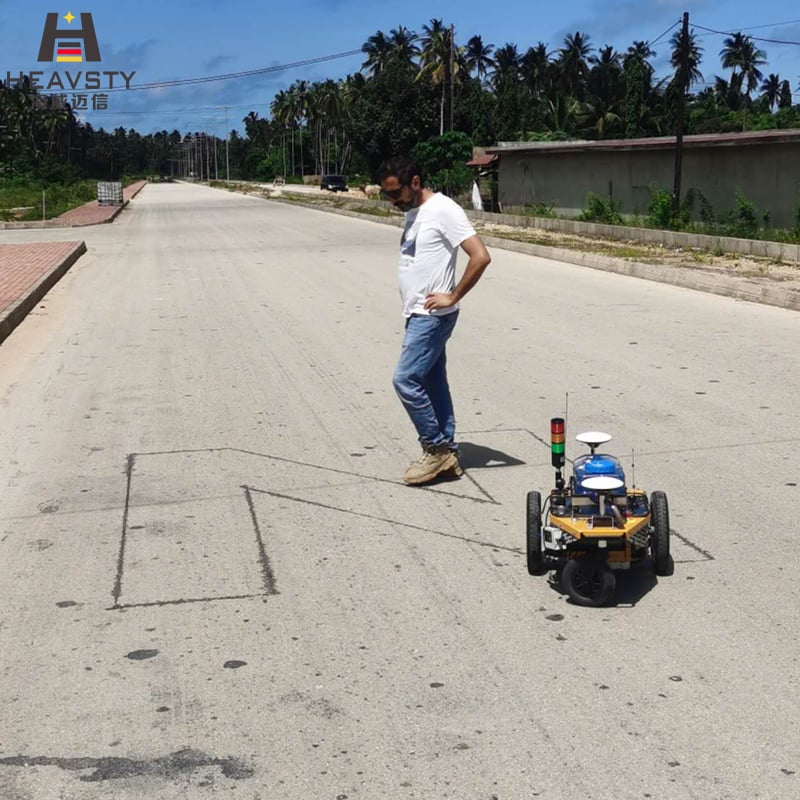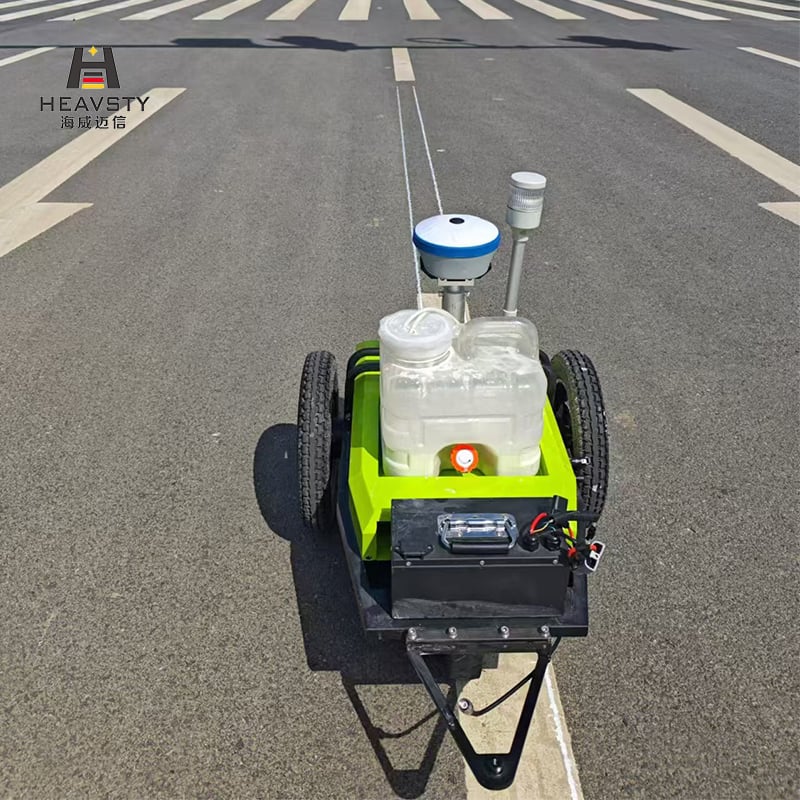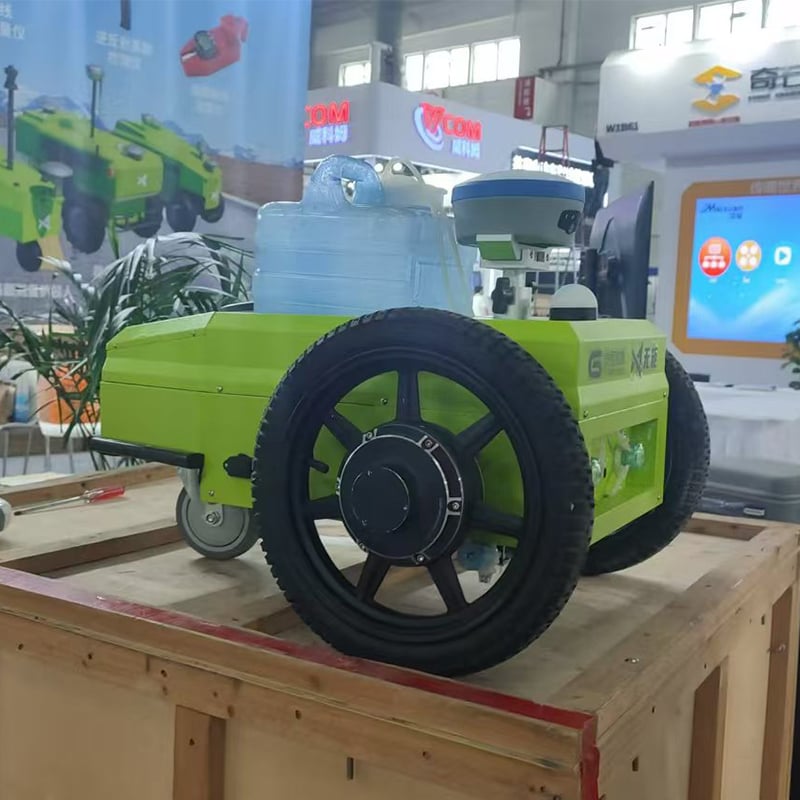
·±5mm Positioning Accuracy: Eliminate rework with precision pre-marking
·Zero Manual Labor Required: Fully autonomous operation replaces 2–3 workers
·CAD/BIM Direct Import: Upload drawings → auto-generate optimal path → start working
·Real-Time Obstacle Avoidance: LiDAR + vision system ensures safe unmanned operation
·Digital As-Built Reports: Automatic job logging for compliance & traceability
Precision Before You Paint: The Future of Road Marking Preparation
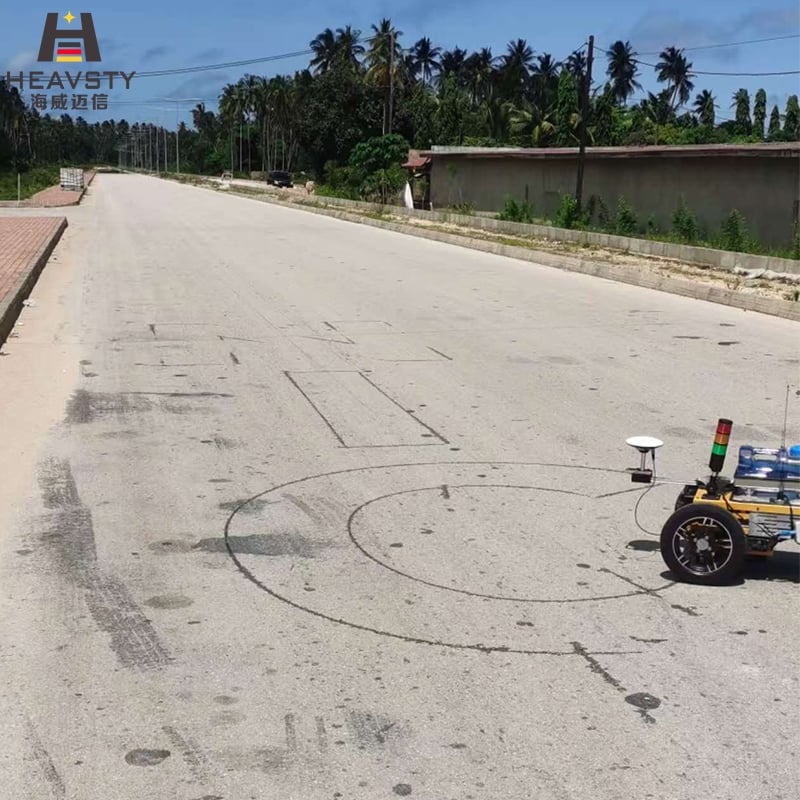
Traditional pre-marking is slow, labor-intensive, and prone to human error. Our Autonomous Pre-Marking Robot transforms this critical first step into a fully automated, data-driven process — setting the foundation for flawless line striping every time.
Why Leading Contractors Are Switching to Robotic Pre-Marking:
Eliminate Costly Rework: With millimeter-level positioning accuracy powered by RTK-GPS and LiDAR fusion, every mark is placed exactly where the design intends. No more misaligned lines, no more wasted paint, no more failed inspections.
Solve the Labor Shortage: One robot replaces an entire manual layout crew. Operate continuously without fatigue, breaks, or safety risks in high-traffic zones. Redirect your skilled workforce to higher-value tasks.
From Digital Design to Physical Reality in Minutes: Import CAD or BIM files directly. The robot autonomously plans the optimal path, adapts to real-time site conditions, and executes complex geometries (curves, intersections, symbols) that are nearly impossible to lay out manually with consistent accuracy.
Built for Real Job Sites: Engineered to perform on asphalt, concrete, and existing markings. Weather-resistant design and robust suspension ensure reliable operation across diverse road conditions and climates.
Compliance-Ready Documentation: Every pre-marked point is automatically logged with GPS coordinates and timestamps. Generate as-built reports instantly for client sign-off, audit trails, and quality assurance — turning field work into verifiable digital assets.
An automatic road marking robot for pre-marking is designed to improve the accuracy and efficiency of road layout preparation before permanent markings are applied. In road construction, maintenance, and traffic infrastructure projects, precise pre-marking helps workers establish lane boundaries, directional arrows, pedestrian crossings, parking spaces, and other traffic symbols. By combining automated movement with a planned marking layout, a road marking robot can help reduce repetitive manual work and improve consistency across the work area. For contractors seeking more efficient construction workflows, an automatic road marking robot offers a practical solution for modern road marking operations.
Pre-marking is a critical stage in road marking projects because the accuracy of the preliminary layout directly affects the final result. If reference lines or symbol positions are incorrect, subsequent marking operations may require costly adjustments, additional labor, or repeated measurements. An automatic road marking robot helps streamline this process by following a prepared route and placing preliminary marks according to the required layout. Compared with fully manual pre-marking, automated assistance can reduce the burden of repeatedly measuring distances and positioning reference points. When used alongside appropriate surveying and site preparation procedures, a road marking robot can support more consistent pre-marking results.
The automatic operation of a road marking robot is particularly valuable for projects that involve repeated layouts or long road sections. Road contractors often need to mark parallel lanes, evenly spaced lines, and recurring symbols across large areas. A suitable automated system can help operators carry out these tasks in a more organized manner, reducing unnecessary walking and repetitive positioning. Depending on the equipment configuration, the workflow may support predefined routes or programmed marking patterns. This approach can make pre-marking more systematic and help construction teams maintain a consistent sequence before the main road marking machine begins permanent line application.
A key consideration when selecting a road marking robot is its ability to support different project layouts. Road construction sites vary in width, surface condition, traffic management requirements, and marking complexity. Straight road sections may require continuous reference lines, while intersections, parking facilities, and urban streets involve more complex positioning. An adaptable pre-marking solution can help contractors prepare different types of layouts while keeping the marking process organized. Before operation, teams should confirm the intended marking pattern, check the working area, and ensure that the equipment settings match the project requirements. These steps help the road marking robot contribute to reliable pre-marking without replacing essential site supervision.
Accuracy is another important factor in automated road marking equipment. Clear preliminary references help guide the subsequent application of thermoplastic paint, cold paint, or other road marking materials. A road marking robot can assist with positioning these references, allowing the crew to review the layout before permanent markings are installed. The ability to identify and correct layout issues at this stage can help reduce material waste and rework. However, actual precision depends on the equipment design, navigation method, surface conditions, operator setup, and maintenance. Contractors should evaluate these factors to determine whether a particular road marking robot meets the accuracy requirements of their projects.
Productivity improvements can also influence the overall economics of road construction. Manual pre-marking often requires workers to measure, mark, reposition, and repeat the same steps across an extensive site. Automating suitable tasks can reduce repetitive effort and allow personnel to focus on layout verification, site safety, equipment supervision, and coordination with the main road marking machine. For projects with frequent pre-marking requirements, this more structured workflow may help improve labor utilization and reduce preparation time. The actual savings will depend on project size, layout complexity, working conditions, and the degree of automation provided by the equipment.
Heavsty Transportation Technology (Jiangsu) Co., Ltd. specializes in the research and development, design, production, and sales of road marking machines. The company has established coordinated systems for technological research, production processes, quality control, marketing services, and information management. These capabilities support the development and manufacture of road marking equipment for professional road construction applications. For buyers evaluating an automatic road marking robot, a supplier's engineering experience and production management capabilities are important considerations because equipment reliability, manufacturing consistency, and service coordination all influence long-term operational value.
Quality control is essential for road marking equipment used in demanding construction environments. A dependable road marking machine should be assessed for structural quality, operational stability, ease of handling, and suitability for the intended application. For an automatic road marking robot, buyers should also consider how the system is configured, how its route or marking instructions are prepared, and what training is required for safe operation. Routine inspection and maintenance can help identify wear or operational issues before they affect project performance. Selecting equipment that matches the contractor's typical working conditions helps support consistent pre-marking and efficient site management.
An automatic road marking robot can be used in road construction, highway maintenance preparation, urban street projects, parking lot layouts, industrial facilities, and other paved areas where accurate preliminary markings are needed. Its value is especially relevant when teams must coordinate layout preparation with the operation of a road marking machine. By improving workflow organization and reducing repetitive manual positioning, automated pre-marking can help contractors prepare for the permanent marking stage more efficiently.
As road infrastructure projects continue to emphasize productivity, quality, and controlled construction processes, automated pre-marking equipment offers a useful addition to professional road marking operations. A road marking robot helps organize preliminary layout tasks, supports consistent reference placement, and can reduce the manual workload involved in repetitive marking preparation. With its focus on research and development, manufacturing, and quality management, Heavsty Transportation Technology provides road marking equipment solutions for contractors seeking dependable tools for modern infrastructure projects. Choosing the right automatic road marking robot requires evaluating project needs, operating conditions, equipment capabilities, and maintenance support to achieve practical long-term results.

Heavsty : a scientific and technological enterprise which is engaged in the professional road marking machine research and development,design,production and sales.
Shangdang Town, Dantu District, Zhenjiang City, JiangSu Province, China
Copyright © Heavsty Transportation Technology(Jiangsu) Co.,Ltd. All Rights Reserved - Privacy Policy
 EN